
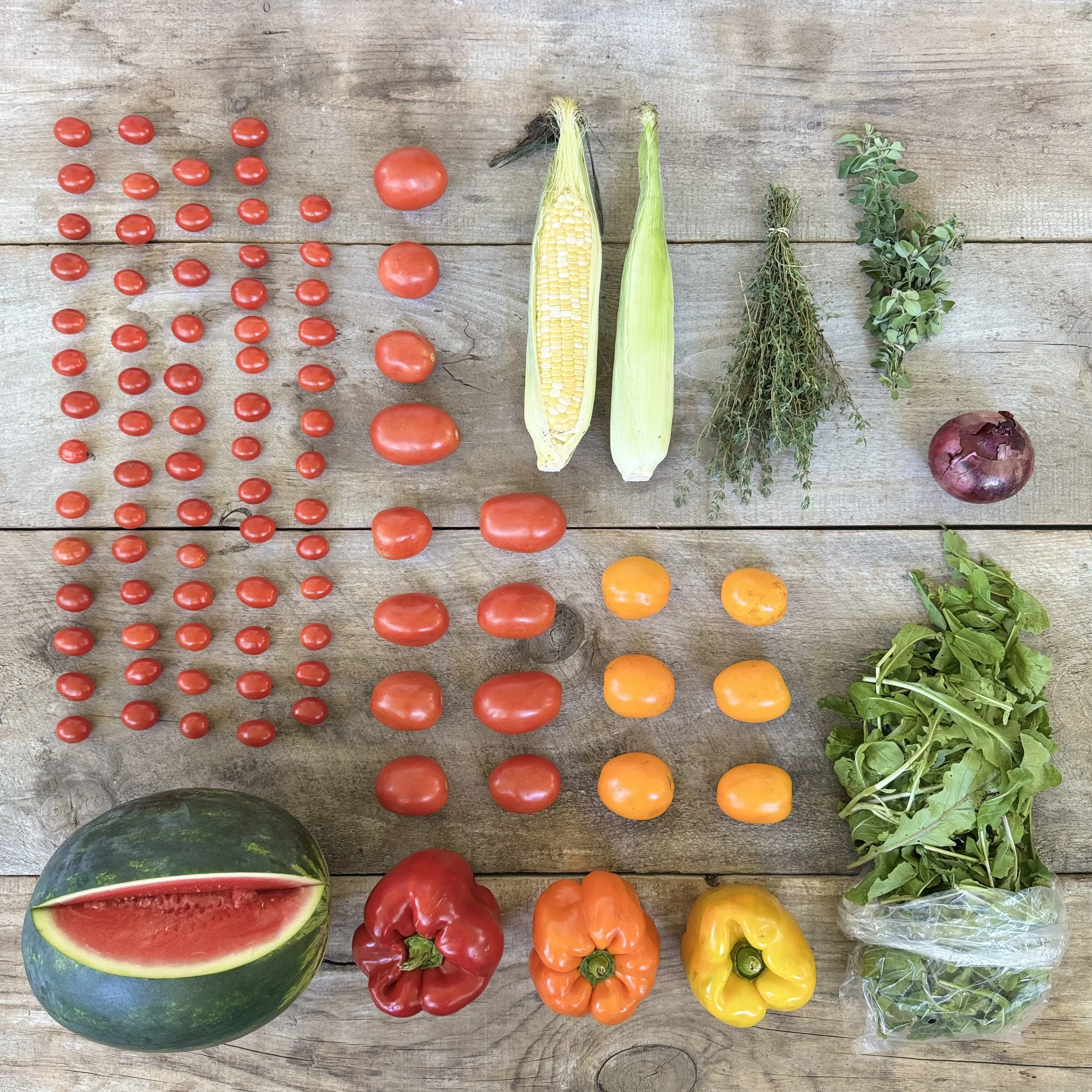
MELON - CHERRY TOMATOES - BELL PEPPERS - ROMA TOMATOES - CORN -
ARUGULA - RED ONION - GARLIC - OREGANO - THYME
EDGEWATER update:
OK yall, I wouldn't say we are drowning in tomatoes, but it is pretty damn close to it. These next two weeks are your moment for sauce prep and execution. Hence the addition of oregano and thyme to your CSA. Our field tomatoes- the Romas and Cherries- are dripping from the plants and our crew is picking them daily trying like hell to keep up with the crop. There are literal towers of tomatoes crated and stacked in our wash pack barn, affectionately known as “the pack shed.” During these times of tetris tomato mayhem it is crucial to remind ourselves that this is such a fleeting reality as tomato season is brief. If you are feeling overwhelmed by the tomatoes jump right into the recipes below, and just do what Mitchell does. Make sauce, make ferments, preserve away, and enjoy when YOU are ready.
Also so noteworthy and so sweet is the watermelon!
Whoop whoop! I’ve been waiting all season for watermelon week. Enjoy!
FARMY FOODIE PRO-TIPS: The following recipe is crafted specifically for this week’s CSA by our friend and hyper local chef (he lives just up the road), Mitchell Davis. if you are curious about alllll the recipes he has to offer, check out his substack:
Fresh Tomato Sauce Makes
about 1 quart
This is a simple sauce I use for pasta or pizza or in any dish that calls for tomato purée or passata. (I use leftover tomato sauce in Indian curries, for example.) You can use any tomato—cherry, grape, heirloom, or best, Roma or plum tomatoes, which are the meatiest. I like to keep the same color tomatoes together, so reds with reds, yellows with yellows and oranges. If you need to add liquid for consistency, you can use anything from water to dry white wine to vegetable or chicken stock. The optional tomato paste or soy sauce (!) adds umami, while the optional sugar adds sweetness when you aren’t making this sauce in the peak tomato season. A vegetable mill, blender, or food processor help achieve the best texture, but you can also just cook things down and keep them a little lumpy for a sauce that works particularly well for short pasta shapes
2 to 3 tablespoons extra-virgin olive oil
1 medium white or red onion, finely chopped
Kosher salt
1 small clove garlic, minced
Pinch hot pepper flakes
1 tablespoon tomato paste or 1 teaspoon soy sauce (optional)
1 teaspoon sugar (optional)
2 pounds or more ripe tomatoes, diced
1/3 to 1 cup water, dry white wine, vegetable or chicken stock, or a combination
1 bay leaf
1 tablespoon chopped fresh thyme, oregano, rosemary, or a combination
Freshly ground black pepper
In a medium stockpot, heat the olive oil over medium-high heat. Add the onion and a pinch of salt and sauté for 5 minutes or so until soft. Add the garlic and sauté another minute until fragrant. Stir in the pinch of hot pepper flakes and the tomato paste and sugar, if using, and cook another 30 seconds. Add the diced tomato and cook, stirring,
until the flesh begins to break down and the tomatoes give off their liquid. Add enough of the additional liquid to allow the tomatoes to simmer—you’ll need more or less depending on how juicy your tomatoes are. Add the bay leaf and fresh herbs, cover the pot, turn down the heat to low, and simmer for 5 to 7 minutes until everything softens and comes together. Uncover, remove the bay leaf, and, if desired, purée the sauce in a food mill, food processor, or blender (standard or immersion) until smooth, adding more liquid if necessary to achieve the right consistency. Taste and adjust the seasoning with salt and fresh ground black pepper.
Bell Pepper Sauce
I use exactly the same recipe and technique as the tomato sauce (above) to make a delicious and unexpected sweet pepper sauce for pasta. Just substitute 2 large red, yellow, or orange bell peppers and a small hot pepper, seeded and chopped, for the tomatoes and pepper flakes in the recipe above. Because peppers are less juicy, you
will need all of the liquid called for and maybe more. If you have any Turkish pepper paste, substitute it for the tomato paste, but tomato paste works fine, too. Finish the sauce by adding the pasta in the pan and tossing with a pat of butter and plenty of freshly grated Parmigiano-Reggiano.
Fermented Tomato Sauce
By lacto-fermenting tomatoes, you develop and concentrate their flavor. You can either separate out the liquid and pulp to use separately as condiments, or purée them together to make a sauce that I use to add a jolt of flavor to things like the Fresh Tomato Sauce, above. Juicier tomatoes are preferable, but any will do, and a combination is best.
Fresh tomatoes, diced
Kosher salt
1 small clove garlic, sliced
Weigh the tomatoes you have—grams make the math easier—and place in a mixing bowl. Add 2% of the weight of tomatoes in salt—so if you have 500g of tomatoes, you’ll add 10 grams of salt—and the garlic and toss to evenly distribute. Pack the tomatoes tightly into mason jars, pressing the pulp down to help release rliquid. Before you put
them aside to ferment, you will need enough liquid to cover the tomatoes. I let them sit uncovered in the jars on the counter for an hour or so to allow the salt to do its work. Press the tomatoes again. If they aren’t submerged, you can add a 2% saltwater solution to help, but do so sparingly so as not to dilute the flavor.
To keep the pulp submerged and prevent mold development, weigh the tomatoes down with a fermenting weight or a small resealable bag filled with water. Cover the jars and set in cool, dark place for about a week, until they have fully developed. If you don’t have fermenting lids, which release gas as it develops, you will have to burp the jars
once a day by simply opening and resealing them. When satisfied with the fermented flavor—taste the liquid to be sure—you can strain out the liquid and purée the pulp separately or you can purée everything together