
P i c k l i s t
GRAPE TOMATOES - POTATOES - CORN - ROMA TOMATOES - SWEET PEPPERS - JALAPENO PEPPERS - ONION - CILANTRO - CAULIFLOWER - SAGE -
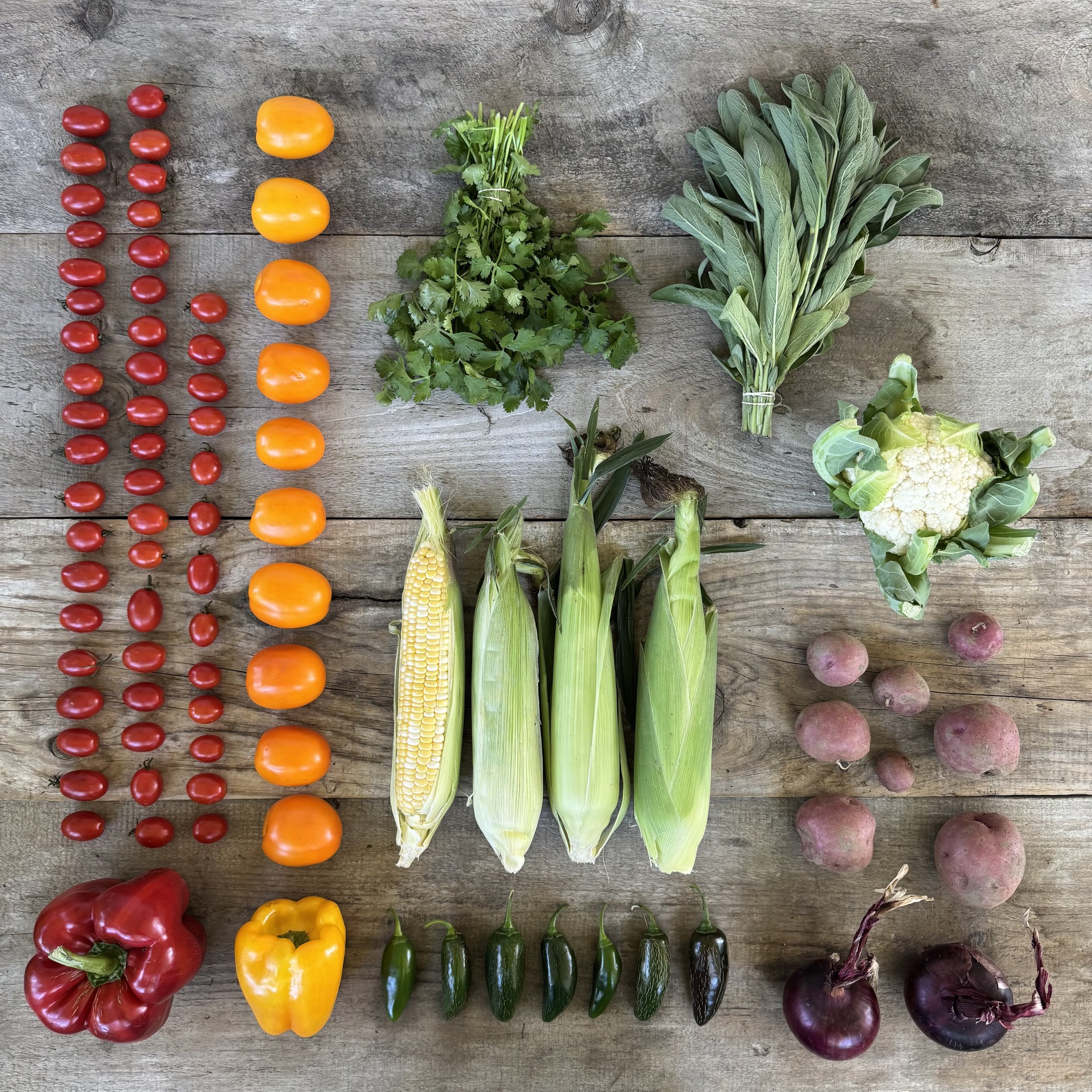
Enter Fall Equinox. Enter long sleeves, wool hats, roasted veg. Did Summer even happen? I am trying so hard to put my face towards the afternoon sun as much as possible, because these light levels just dropped. Frost warnings are on the horizon and today we begin prep for the chilly nights ahead. Anne has been harvesting flowers on repeat, and the field crew has been going hard covering green beans and tomatoes with remay. Because while it is officially fall, not one of us is ready to say goodbye to summer and who doesn't love a little season extension.
Now let’s get into those herbs: Cilantro! Sage! While you don’t typically find these two darlings married together on one plate, we would be remiss if we did not include these aromatic bunches in this week's CSA. For starters, we have been struggling all season long to grow cilantro. It’s an herb that is in demand from Spring through Fall, and yet it took us this long in a season to grow a decent crop. Cilantro is one of those herbs, for us, that gets seeded into the ground with the carrots and the dill. Unfortunately, if we can’t get to the field regularly for weeding, these herbs get swallowed by all the most aggressive weeds out there- crab grass, lambsquarter, etc… The carrots are more resilient but the cilantro and dill never stand a chance. Thus, our first cilantro seeding was obviously ignored due to the all encompassing strawberry season. The second seeding got trashed during blueberries. And here we are a few seedings later, with the fluffiest cilantro we’ve had all year. I know there are for sure haters out there, but I am a deep lover of this herb. I am ecstatic to welcome it back into our lives, and I am even more jazzed as it was seeded at my home which means, come spring cilantro will return. This hardy little plant loves to come back and fluff up soon after the ground thaws in Spring.
As for sage. I held back as long as I could. Our sage planting has been loving life this whole time. However, I tried to wait until it was truly oven-roasting weather. And here we are, the first day of FALL, with ovens preheating ready to receive gratins and sheet pans of taters with sage. See Mitchell’s recipe below for details:)
Stay warm people, cover your frost tender plants and basque in the beauty of the last minute surprise cauliflower that made it to the pick-list just in time.
FARMY FOODIE PRO-TIPS:
Herbs:
For both herbs, the very best way to keep them as fresh as possible is to put them in a plastic bag and throw them in the fridge until you are ready to chop, sprinkle, and garnish.
So many jalapenos:
pickle them! And if you have leftover brine, pickle your red onions! It’s easier than you think, I promise.
PICO DE GALLO:
chop up your romas, jalapenos, cilantro, and onions. Add fresh lime juice, salt and pepper. Mix together, get yourself your fave tortilla chip and double dip like no one’s watching
The following recipe is crafted specifically for this week’s CSA by our friend and hyper local chef (he lives just up the road), Mitchell Davis. if you are curious about alllll the recipes he has to offer, check out his substack:
Potato Sage Gratin
Serves 4 to 6
Soft butter
1 large onion, thinly sliced
1 1/2 to 2 pounds potatoes, peeled and thinly sliced
Salt and freshly ground black pepper
About 10 fresh sage leaves, chopped
Freshly ground nutmeg
3/4 cup heavy cream
1 egg
3/4 cup shredded melting cheese, such as Gruyére, Gouda, or Cheddar
Preheat the oven to 375°F. Very generously butter an 8”- or 9”-inch baking dish. Scatter a few onion slices on the bottom of the baking dish. Arrange about one third of the potatoes in an even layer in the pan. Scatter half the onions on the potatoes. Season generously with salt, black pepper, some of the chopped fresh sage, and a pinch of nutmeg. Repeat with another third of the potatoes, the remaining onions, and seasonings. Finish with a final layer of
potatoes, and season with salt and pepper.
In a small bowl, beat the heavy cream with the egg until blended. Pour this over the potatoes in the baking dish and top with the grated cheese. Cover tightly with aluminum foil and bake for
about an hour, until the potatoes are soft and bubbly. Remove the foil, raise the oven temperature to 400°F., and continue baking until nicely browned, 15 to 20 minutes. Allow to cool for 15 minutes or more before serving.
Pasta with Baked Cherry Tomatoes, Peppers, and Feta
Serves 3 or 4
1 pint cherry tomatoes, rinsed, stems removed
3 Roma tomatoes, coarsely diced
1 sweet Carmen or Bell pepper, seeded and chopped
1 small hot pepper, seeded and minced, or a pinch of red pepper flakes (optional)
1/2 cup extra-virgin olive oil
2 cloves garlic, minced
Salt and freshly ground black pepper
1/2-pound (8-ounce) block imported feta, drained
Handful of fresh basil, flat-leaf parsley, or other herbs, chopped
1/2 pound (8 ounces) dried short pasta, such as penne, fusilli, shells, or bowties
Preheat the oven to 400°F. In a large (9”x13”) baking dish, combine the cherry tomatoes, diced Roma tomatoes, chopped sweet pepper, hot pepper, if using, and the garlic. Pour about half the oil into the pan, season with salt and freshly ground pepper, and stir to combine. Spread the vegetables out into an even layer. Place the whole block of feta in the center of the dish nestled in the vegetables. Pour the remaining oil on the cheese. Set in the preheated oven for 35 to 40 minutes, until the tomatoes have burst and the feta has browned around the edges.
Meanwhile, bring a large pot of salted water to a boil and cook the pasta until al dente. Reserve 1/2 cup of the pasta cooking water and drain the noodles. When the tomatoes and feta are done, remove from the oven. Using a fork, smash the cheese and tomatoes together to break them up. Add the cooked pasta, the chopped herbs, and a tablespoon or two of the cooking water and stir to distribute, adding more cooking water, if necessary, to loosen the sauce so it combines well with the noodles. Serve warm.